
Termite Swarm Season in East Texas — What It Means and What to Do
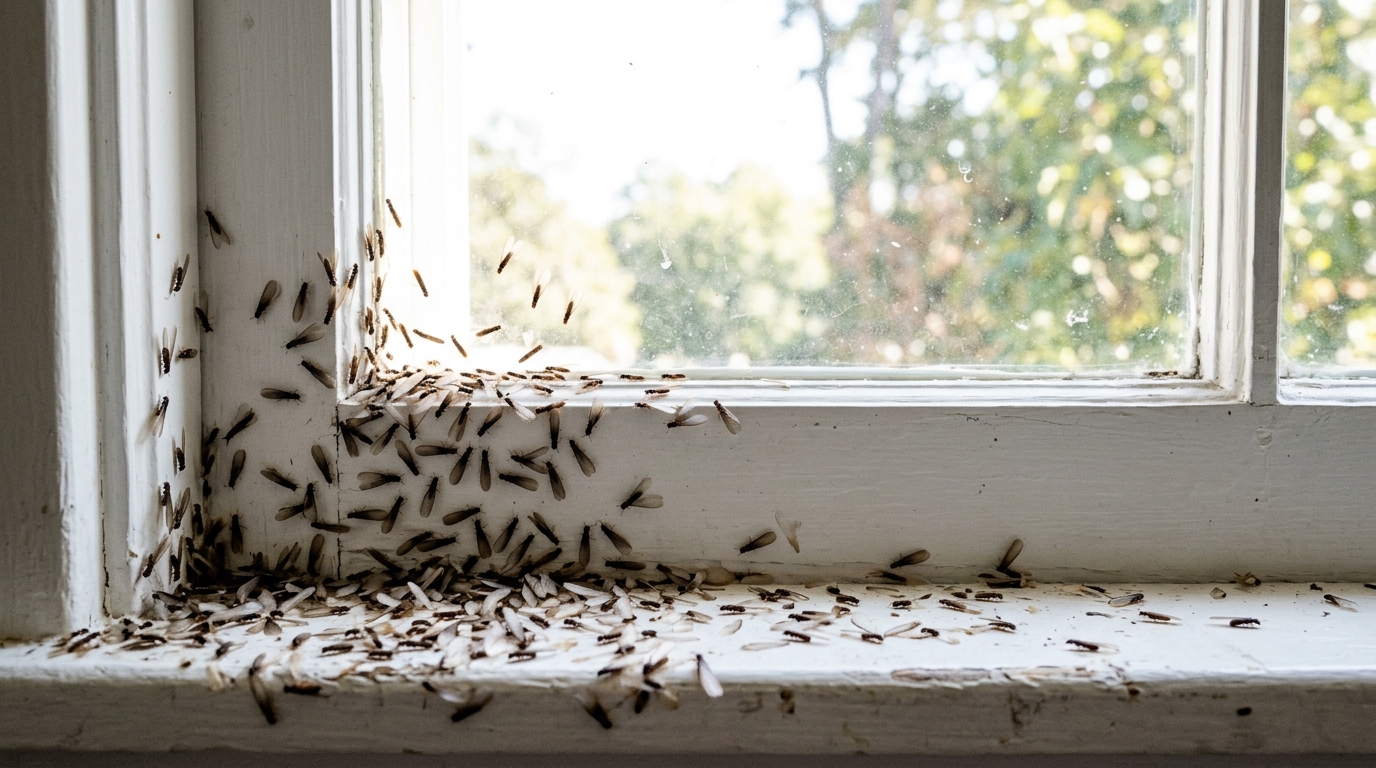
If you have ever walked into a room and found dozens of flying insects near a window, or come home to a pile of shed wings on a windowsill, you may have experienced a termite swarm. It is alarming the first time, and the immediate instinct is to do something — spray something, call someone, or both at once.
Here is a clearer picture of what a swarm actually is, why it is not an immediate structural emergency, and what you should actually do.
What Is a Termite Swarm?
A termite swarm is a reproductive event. Mature colonies produce winged termites — called alates or reproductives — once they reach a certain size and conditions are right. These winged termites emerge from the colony en masse, fly briefly, shed their wings, and attempt to pair off and start new colonies. The vast majority of swarmers die before establishing a new colony. The ones that survive are the founding pair of the next generation.
What the swarm tells you is this: there is a mature, established colony nearby. Swarmers emerge from the parent colony — not from inside your walls (usually). The swarm is the colony's way of reproducing, not a sign that termites have suddenly appeared in your structure.
Swarm Season in East Texas
In Walker County and East Texas, termite swarms are concentrated in two windows:
- Native subterranean termites: Typically swarm in spring — March through May — during daylight hours, often within a day or two of significant rainfall. Swarms commonly occur mid-morning to early afternoon. You may see swarmers emerging from the soil around a stump, from a crack in the foundation, or from mulched areas near the structure.
- Formosan subterranean termites: Swarm at night from late March through June, concentrated in May and early June in Walker County. They are strongly attracted to light — porch lights, street lights, and interior light visible through windows. Piles of wings near exterior light fixtures or on windowsills after a warm, humid night are a Formosan indicator.
Timing alone does not definitively identify the species — some overlap exists — but it is a useful starting point.
Swarmers Inside vs. Outside
Where you see the swarmers matters:
- Swarmers outside only: The parent colony is most likely in the soil outside the structure — near a stump, in a mulched bed, or beneath the surface of your yard. This does not mean termites are in your home, but it does mean a large colony is nearby and foraging. An inspection is warranted.
- Swarmers inside only: If swarmers appear inside — emerging from walls, crawl space, a vent — the parent colony is inside or directly beneath the structure. This is a more urgent signal. The colony has been present long enough to mature and is established in or under the building.
- Wings on the windowsill (no live swarmers): You missed the swarm. The alates emerged, flew, shed their wings, and moved on. The pile of wings is what is left. It is still meaningful evidence — identify when it happened (recent rainfall? nighttime?) and call for an inspection.
What Not to Do During a Swarm
- Do not spray consumer insecticide on the swarmers. Killing swarmers does nothing to the parent colony. You eliminate the surface symptom while the colony continues feeding underground.
- Do not seal the emergence point without treating the colony. Sealing gaps where swarmers emerged traps the swarm briefly but does not affect the colony. The colony will find another emergence route.
- Do not panic — but also do not wait months. A swarm is a signal, not an emergency requiring you to vacate the house. But it should not be set aside indefinitely. Call for an inspection within a week or two.
What to Do
- Note the date, approximate time, and location of the swarm (inside, outside, which room, which side of the house).
- If possible, collect a few swarmers in a sealed plastic bag — live or dead. They can be used to confirm species during the inspection.
- Take a photo of any wing piles or emergence points.
- Call a licensed termite inspection company within a week or two. In Walker County, call 936-935-0197.
The inspection will locate the parent colony, determine whether it is inside or outside the structure, identify the species, and recommend appropriate treatment if warranted. If the colony is only in the soil and has not reached structural wood yet, early treatment is the least expensive and least disruptive outcome. If it has been feeding inside the structure for some time, earlier action is better than later.
One Thing Worth Knowing
A termite swarm means the parent colony is mature. Termite colonies typically need 3 to 5 years to produce reproductives. If you are seeing a swarm, the colony has been established and growing for at least several years. That does not mean catastrophic damage has already occurred — but it does mean the colony has had time to find and feed on wood, and that the inspection will likely find evidence of activity even if visible structural damage is not yet apparent.
Swarms are one of the clearest diagnostic signals homeowners receive. Use it. If you saw a swarm recently — or found a pile of shed wings — schedule a termite inspection. We serve Huntsville, Willis, Conroe, and all of Walker County.
Protect Your Home
Before It's Too Late
Licensed & insured termite specialists serving Walker County.
Same-day inspections. Honest pricing. No contracts.
Mon–Fri 7 AM – 6 PM, Sat 8 AM – 4 PM